In memory of Jörg Becker
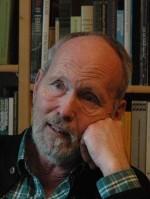
Photo by: profjoergbecker.de
It is with great sadness that IAMCR marks the passing of Professor Jörg Becker, a long-standing and deeply engaged member of our community.
Jörg joined IAMCR in 1976 and remained closely connected to the Association for almost 50 years. He served as a member of the International Council from 1984 to 1992 and, more recently, as Chair of the IAMCR History Commission. In July 2026 he had been awarded a lifetime membership of IAMCR for his five decades of contributions to the Association.
Together with Robin Mansell, he co-edited Reflections on the International Association for Media and Communication Research: Many Voices, One Forum, published in 2023, bringing together the voices and memories of IAMCR members to reflect on the Association's history and its contribution to the field.
In the preface to that volume, Jörg wrote about what almost five decades of membership had meant to him. IAMCR, he said, had become "a part of my family" — a place where professional and academic relationships had developed into lifelong friendships. His words speak to both his long commitment to the Association and the many personal connections he built within our community.
We remember Jörg not only for his scholarly and institutional contributions, but also as a colleague and friend who was part of IAMCR for much of his academic and professional life.
Below, colleagues and friends share their memories of Jörg and reflect on his life, work and contribution to IAMCR.
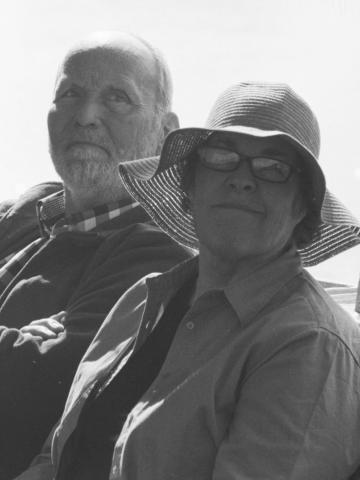
IAMCR conference Durban 2012
Photo by: profjoergbecker.de
I met Jörg Becker at the first IAMCR conference I ever attended, in Leicester, United Kingdom, in 1976. It was also the first one for him. And while he initially appeared quite serious and reserved, I eventually came to know him as a scholar of extraordinary dedication and intellectual generosity. I also discovered his keen sense of humor and his kind, gentle nature.
His extensive scholarly work was remarkably diverse and international in scope, ranging from an early children's book about elephants to a critical study of Elizabeth Noelle-Neumann, and culminating in his recent historical analysis of the journalist, Richard Sorge.
Jörg’s contributions and dedication to IAMCR were equally notable. He served on the International Council, participated in numerous sections and working groups, and, together with Robin Mansell, co-edited the association’s recently published history, Many Voices, One Forum.
I offer my sincere condolences to Jörg’s family. He will be greatly missed.
Janet Wasko (Former President of IAMCR, 2012-2020)
I am finding it hard to believe that Jörg has left us. When I was starting out as a PhD student in Canada, he was one of the critical scholars I was encouraged to read. My first reading was a paper on ‘Communication and Peace’ (1982). He wrote that “all in all, access to civilian communications technology, command of its resources, participation in the decision-making process as to the use of these resources and the position of the peripheries in the flow of information must be recognized as expressions of structural violence”. Next was his paper “Contradictions in the Informatization of Politics and Society” (1983). After that, his book Information Technology and a New International Order (1984). I kept on reading – learning much about structural power in the media and communications field and about contradictory relations, historically and now.
I met Jörg at my first IAMCR conference in 1984 in Prague. He was tall and he was formidable. I was intimidated, but not for long. Whenever we met, he wanted to know about my research. He encouraged me time and again to probe critically especially when he thought I might be becoming a little too interested in reforming policy rather than getting at the root causes of injustices. Over the years he invited me to write chapters for his edited collections. He invited me to a Moscow conference he organised in 1990 on ‘Telecommunications in a Common European House’ – I was probably the most junior researcher and I was very honoured. When I became Head of IAMCR’s Communication Technology Policy Section in 1990, he came to panel sessions, always engaging with the speakers. He came to section business meetings. He sat in the back quietly. Afterwards he told me privately what he thought I was doing well and what I could do better. When I was running in the election to become IAMCR President, he commented on how I could strengthen my election blurb. When I was President, he sent me messages. Always helpful. Always making me think. In the early 2000s he hatched a plan for an edited book on “Militarization and Information” inviting me to co-edit it with him. I don’t remember why we didn’t. A missed opportunity. His archival research knew no bounds – on occasion he contacted me to hire a PhD student to research UK archives – the topics were diverse, always concerning figures in the history of the communication field and how they had influenced IAMCR for better and for worse.
Our most intense collaboration was during the preparation of the co-edited book Reflections on the International Association for Media and Communication Research: Many Voices, One Forum (2023). With 34 chapters it was a big job involving lots of IAMCR members. When we were done, Jörg offered to make me lead editor. I declined. It was Jörg who steered the book project, kept it on track, encouraged authors, and commented on every chapter. I tell this because it is an example of Jörg’s enormous generosity as scholar and friend. He carried on emailing after we were done with the book. He sent me short pieces he was writing for comment and for suggestions on publication outlets. He wanted to know what I was working on, volunteering to discuss it and encouraging me to get on with it when he knew I was struggling. I was too slow. Just when I was about to send him the draft, I learned that Jörg had died. I have photos he sent me of his family, his participation in protests, in conferences. Also, bits of his writings. Lots to remember him with. … He is very much missed.
Robin Mansell (Former President of IAMCR, 2004-2008)
Jörg Becker has been a fellow traveler at the IAMCR for nearly half a century. It provided him as an individual(istic) German with both an intellectual framework and a fraternal home for over four decades. His formal record in the IAMCR history includes two terms (1984-92) on the International Council – not on Executive Board, nor on Section or Working Group leadership – but in his own career the IAMCR constituted a central lifeline.
Jörg is actually a classic example of how the IAMCR has supported and nurtured communication scholars at various stages of their lives – by providing contacts and a mental framework far beyond one’s own (shaky) academic institutions. His story is aptly reflected in the Festschrift Widerworte: Philosophie Politik Kommunikation edited by his colleagues at Marburg and Innsbruck in 2011.
Jörg leaves us with much to learn.
Kaarle Nordenstreng (IAMCR Historian)
We were friends for half a century and over the past 20 years we celebrated this friendship every year in Amsterdam with what Jörg had baptized “our friendship lunch”. I was invited to celebrate his 80th birthday on September 19. That changed into an invitation to speak at his funeral on September 18. Throughout our joint history with the IAMCR Jörg was a reliable and inspiring friend. As friend he strongly advised me against my candidacy for the IAMCR presidency in 1988. He thought that bureaucratic politics would do damage to my free spirit. Whether he was right or wrong remains on our incomplete agenda.
In recent years Jörg turned from writing about communication issues to biographical writing. He enjoyed it enormously and it did him visibly good. He had found a new simulating academic house. As a result, our conversations shifted from the themes we had both written about to reflections on the Stalinist spy Richard Sorge who had been in the Netherlands to convert the Catholic coal miners in Limburg to Communism, and the communist from Remscheid, Gustav Flor, who fought in the Spanish civil war and fled to Amsterdam to escape from the Nazis.
His biographic work also served the IAMCR. He wrote about the nationalist-socialist past of prominent IAMCR member Dr. Elisabeth Noelle-Neuman. Dallas Smythe, Herbert Schiller and George Gerbner had encouraged him to write a book about her. In the introduction he writes that he was amazed that for many years, no scholar in the field of communication studies had deemed it necessary to systematically examine Noelle-Neumann’s work during the Nazi era. He saw his book about her as a contribution to the demythologisation of the discipline of communication science and thus also as a central part of its own discipline’s history. For his critical archaeology he had still more names in his notebook.
The German university system treated him in an extremely unfair manner and did not grant him the position to which he was entitled. My interpretation of this is that academic bureaucracies are characterized by cowardice. Jörg once asked whether cowardice was a basic human right. If that were so academics, all over the world –with the magnificent exceptions - deserve human rights awards for not speaking out. Jörg spoke out. As anti-fascist and as critic of Israeli politics. His “Zivilcourage” to speak with inspirational clarity was not acclaimed by those who refused to listen.
In a brilliant speech at the 20th ‘Bayreuther Gesprächen’ in 2025 he expressed his deep political frustration with German politics and quite frankly said “I'm helpless and have no idea how we in Germany can get out of this mess”. He knew that there were no more easy answers to the famous question of Vladimir Lenin in 1902, “What to do?”. For the question “what to do” he no longer had an answer. The utopian design of the 1917 October Revolution does not work anymore and in our annual meetings we began to explore the resistance to the resurgence of fascism. We have not been able to continue that discussion.
To keep the sense of someone’s life alive, remembrance is the only tool at our disposal. I want to remember Jörg Becker as a thinker with inspiring “Zivilcourage” who refused simplistic solutions for humanity’s problems and dared to express frustration and helplessness.
But the best way to remember him is as the loving grandfather of the girl that was born in November 2025. He wrote “Hooray!”. Hooray” for you, dear friend.
Cees Hamelink (Former president of IAMCR, 1990-1994)